The rain had stopped by 6am this Republic Day morning in Chennai, but perhaps the earlier downpour caused some of the delays that seemed to ripple through the parade. This was only my second or third time attending the celebrations marking the day India's Constitution came into effect in 1950, transforming the country into a sovereign democratic republic. At around 145,000 words, it remains the world's longest written constitution of any sovereign nation - a detail that feels particularly apt given the sprawling complexity of the country it governs. But the energy felt notably more subdued than I remembered.
Chief Minister Stalin's face looked out from seemingly every vantage point - banners, posters, backdrops - a reminder that Republic Day celebrations, for all their national symbolism, are also deeply local and political affairs.
What struck me most wasn't what was there, but what was harder to access. Security has been tightening at public events across Chennai - sporting matches, cultural festivals, and now Republic Day. As someone who documents these occasions with camera in hand, I've noticed the gradual constriction of movement and access. The informal spaces where photographers could roam more freely are disappearing, replaced by cordoned zones and checkpoint scrutiny.
Meanwhile, VIP vehicles tore up the side lanes at alarming speeds - late arrivals? Intentional displays of privilege? Hard to say, but jarring nonetheless against the disciplined precision of the marching bands and mounted cavalry passing by at ceremonial pace.
Still, there were moments worth savouring: the truly magnificent military moustaches on display, worn with evident pride. The intergenerational nature of it all - teenage musicians in their band uniforms, elderly veterans standing at attention, cavalry officers on horseback maintaining centuries-old traditions.
Republic Day remains a lens into how India sees itself, celebrates itself, and organises itself. Rain or shine.
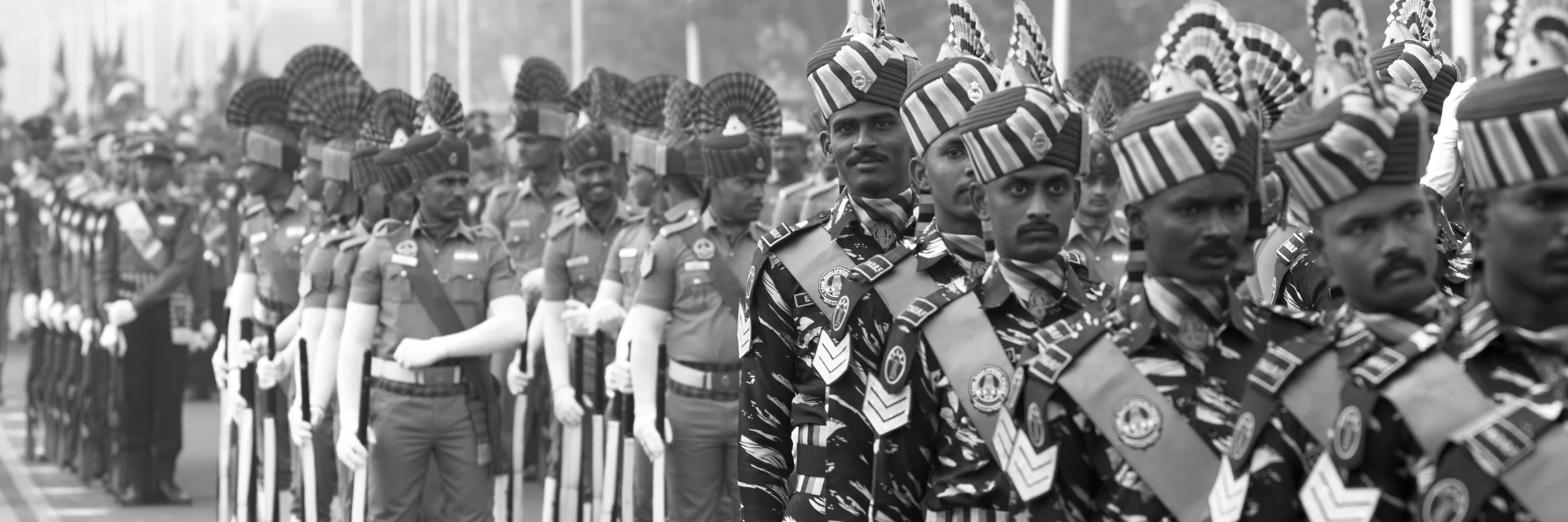
Republic Day, Chennai, 2023